This blog is a platform that I use to share ideas and catalogue my thoughts. My main interests are in Entrepreneurship, Venture Investing, Hospitality and Economics.
The meetup yesterday on the Lean Startup was very inspiring, so I am following up the post with some more thoughts on how can we implement the validated learning concept on various businesses and scenarios. I strongly believe that the Internet and all the applications that have been built on this global network provide us with valuable sensors to touch, feel and understand the dynamics of human behavior. We can conduct experiments, collect data and learn from them. This is precisely what Validated Learning is from my perspective. The classic example is the concept of selling a car through the internet, when someone floated this idea 13 years back, the conventional wisdom was it will never work but I know various examples from Steve Blank's book as well as Bill Gross'sinterview on This Week in Venture Capital with Mark Suster show how they experimented and did validated learning. Bill Gross is a fantastic ideas guy, check out the full video but if you want to skip to the part about the Car Selling example it is at 0:31:41 in the video. The summary of it is they had just put a landing page with some images of Car with a price tag on it, they had no inventory or distribution or management team or any infrastructure to support selling cars but they did it anyway to learn if anyone would click on the "Buy" button and their idea was if anyone click on it they will have validated the idea a car can be sold on through the Internet, they followed that link to test further hypothesis will a user actually give their credit card information and personal details like address, phone number etc sure enough they put up a form that takes in the information of the buyer and the credit card information. They were surprised to see the orders start to come in, and when it did they physically drove to a Car seller bought the car and deliver it to the buyers. When you think about this, the buyer really does not care whether you are buying it from another seller or not, all he cares about is the convenience of being able to buy a car from his office. They found out that there were many buyers and once they had validated that hypothesis, they built the infrastructure to support growing sales. Actually, I think they took down the site in a day because they could not fulfill the orders that poured in, thats what I can a luxury problem.
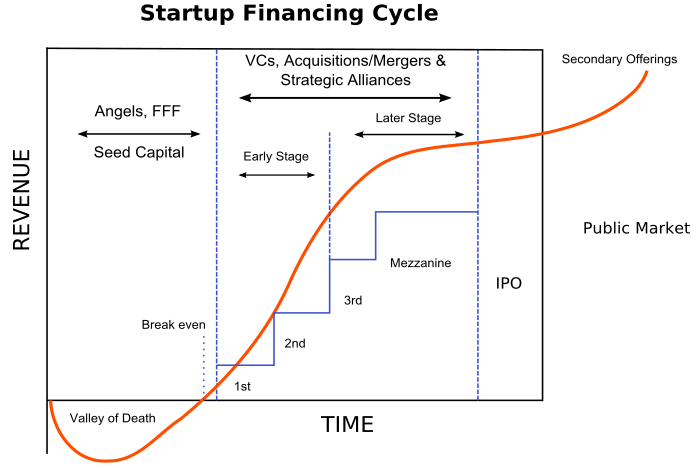
I have been getting a lot of questions related to How does one value Startups. The best reference for valuation goes all the way to Warren Buffet's teacher Benjamin Graham and his classic book Security Analysis, I believe the principles taught in those books are timeless ie. they don't fundamentally change what does change is our perception of value. More recently, Aswath Damodaran's work on Valuation is quite impressive and it is used by many professionals. He actually has most of his work available online. Value is such a fluid word, what is valuable to a startup when it is getting out of the door is not as valuable when it is looking into the abyss of the valley of death. I have written about the challenges in valuing startups and the uncertainty that always stares at you when you want to do this exercise. I personally think this is the reason Banks or Warren Buffet do not want to even look at startups because they don't understand the challenges of running a company that is creating value in an uncertain market climate. In some cases they actually create a market, it hard to calculate the size, market penetration etc.
I have been a student of looking at many of the prominent Venture Capital Investors like Fred Wilson, Brad Feld and Mark Suster, who share their thoughts and methods since I have become interested in investing in startups. Here is a list of blog posts that Fred wrote on Valuation, I have listed them in the order that I thought was relevant to me:
AVC.com : The Present Value of Future Cash Flows To all those Python hackers out there here is a link to code that was shared with everyone on this post by Chris Dixon. The code actually simulates equity payout values with anti-dilution preference etc, I have gone back to my roots of looking at code to learn a concept. I don't prescribe it to everyone but works for me. If you have Python installed give it a twirl, I love this way of looking at valuation.
AVC.com: Determining Valuation Multiples, there is a link in the article that goes back to a Internet Market place business valuation. I recommend that as well to be considered. In the comments section there is a reference to the baseline data published by Damodaran is also very useful. Check it out here
Considering the above 4 posts and the links they refer to and using the basis of valuing any asset from the classic method one can develop a model. We have developed that model, no it is not in a shape that I can share, when I have time will make it available in this blog.
Saw the news that Nuance technologies (the one that powers Siri in Apple iPhone 4S) has launched a voice enabled TV that allows you to control your TV with your voice. I think this is just the beginning of things to come that are voice enabled. Mark Suster had a post about the 10 Hypotheses for Technology Investing byRoger McNamee and Mike Maples, Jr. where they talk about Hyperweb. Which is a fancy word for the mash up all the technology platforms that I have been talking about i.e Google, Twitter, Facebook, FourSquare, etc think of all the fascinating things that you could do if the entire power of the web can be mashed together for a specific reason and if it was voice enabled. You can have your virtual assistant and apply the power of the web to businesses. This revolution could bring about the change in business services what Blackberry did to email.
It was made very clear by my parents early in my life that borrowing money was a bad thing so I shy away from credit as much as I can. I am totally ok with equity... shared risk-reward. However, I do find it very strange when most of the startups that I meet or talk to focus so much on raising funding. This should never be the focus of a startup. Tell me about how you are going to change the world, tell me about your passion and how your team is solving a hard problem and why the value of what you are solving is generating so much interest that you will be making your business viable and sustainable. But sadly, the mainstream media (yes, I am referring to you TechCrunch!) talks about raising money as if it is a validation that the startup has made it or a proxy for the amount of money the startup would eventually make. For those of us investing money know that is never the case, we bet on potential and the team's ability to execute... there you go I said it, it is a BET. Mark Suster, had an interesting post about the dual metric dilemma Profitability or Growth. I personally like Profitable Growth of course how one getting there is the key. It is different for every company.
User growth, traction, revenue growth and profitability are the main indicators of success for a startup. I hope we can focus on that, obviously getting that data is hard but it would be a better indicator of the growth of startups than the idea or the money they raise.