Showing posts with label Company. Show all posts

Wednesday, February 22, 2012

Marorka: A Startup Profile

Marorka
Marorka (Photo credit: Finnur)
It is not fair to do a Startup Profile on Marorka as it is technically not a startup because the company has sailed the rough waters of the Valley of Death and it is well on the way of becoming one of the stars of the Icelandic startup story. The company was formed in 2002 so it has been a 10 year journey... However, there is a story behind the story, it took the company a while to break into the Shipping industry I am told. It is only in the last 3 years  that the company has really taken off and I believe the reason is because of their focus on the software side of the data that they gather from the ships and opening access to that data through the internet. In their own words "Marorka offers onboard and onshore Fuel Management and Energy Management solutions equipped with real time monitoring and decision support, an essential part of operational optimization. With Marorka’s energy management solutions for voyage tracking, inventory recording, reporting and data analysis, your business will be well on its way to maximized efficiency." 
I was rather surprised to hear that Ship builders do not provide the necessary information to optimize energy usage in the vehicles, it actually makes sense, no car manufacturer tells you how best to drive your car i.e when to step on the gas and when to step on the brakes. It is quite interesting that the founders of this company saw the opportunity and built a business. What was very interesting for me to understand was the sheer volume of time series data that they capture transport to a central server process it and make it available on a portal for the Fleet or Ship manager on shore to see. There are a number of challenges one has to factor, connectivity to the Internet is not continuous and the amount of data that can be transmitted is limited so I see algorithms that were used in the early days of the internet data transfer protocol should serve them well. I don't know their software architecture but it should be an interesting problem to solve or improve on.
Enhanced by Zemanta

Wednesday, January 04, 2012

2011 has been a record year in Iceland... for bankruptcies

I wrote about the GDP growth in Iceland and wondered where the growth was coming from. I was right, 2011 was a record year for Corporate Bankruptcies since the collapse of the financial system and we have data only until November. What is more interesting is that for the first time in the last 11 years the number of companies formed (1533) has never been closer to the number of companies that were insolvent (1427).
I think we should also look at wage and employment numbers to see if that is driving the growth. The second graph is the total labor force as can been seen that has dropped since the financial collapse. The third graph is the unemployment %, 2011 is my estimate as we have data only till the 3rd quarter of 2011. I estimate 7.25% unemployment for the whole year, please don't hold me to it because I don't believe in estimates. As can be seen the macro variables don't look all that great for a GDP growth but IMF, the Central Bank of Iceland and the Ministry of Finance all say there is GDP growth so we all just have to take their word for it. I can say one thing the sentiments are improving, I saw the following news published by one of the investment companies Eyrir Investment, that they have successfully convinced a Pension fund to invest in them and they have started a new venture capital focused fund called Eyrir sprotar slhf. This is very encouraging. 


"Eyrir Invest ehf. has today decided to increase the number of shares in the company by approximately 10% by selling 101 million new shares at the price of 24.25 ISK. The total number of shares after the issue is 1,108,681,220 each share is 1 ISK of nominal value. The new shares will be purchased by Lífeyrissjóður verzlunarmanna (The Pension Fund of Commerse).
The issue of new shares increases the investment capacity of Eyrir Invest. Simultaneously with the issue Eyrir has founded an independent investment company for investments in venture capital; Eyrir sprotar slhf. Eyrir sprotar will emphasise supporting promising ventures for international growth and value creation."
Although the skeptic in me says lets see what they do with the raised capital. They have raised almost $25,000,000 that is a decent size for Iceland if all the capital is going to be deployed in venture companies but I fear they will invest in companies that will take a long time to establish themselves like Ossur or Marel. I really would like to understand their investment thesis. I think what is needed are companies that are growing really fast outside of Iceland.
Enhanced by Zemanta

Saturday, September 05, 2009

10 things Great Companies and Great Investors do...

Sand Hill Road sign from 280 north. "KTVC...Image via Wikipedia
Given that I have been thinking about starting out a Venture Capital company, I have been reading the blogs of veteran VCs
and Entrepreneurs. I like
Fred Wilsons blog and here he talks about what 10 things great companies do, to counter that Matt Blumberg has written about what 10 things great investors do. I thought both were worth noting.
Reblog this post [with Zemanta]

Wednesday, June 24, 2009

VC fund allocation and Conditional Probability

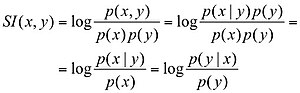
PMI-and-Conditional-ProbabilityImage via Wikipedia

I had a very interesting discussion with a friend of mine yesterday. I was suggesting to him that Venture Capital funds should allocate funds such that 15% of the capital goes into VC companies, 5% goes into growth companies (i.e companies that have stabilized the products or services, are generating cash and have broken even) and 80% should be cash or cash equivalent.

He made an argument that an investor wanting to invest in a VC funds would not choose the above allocation. I asked him to ellaborate and he said that the investor will not get the total bang for his buck... he said that if the above fund´s VC allocation returned say 100% of the allocated capital the investor would only get 15% of that 100%. Sounds logical but this is precisely the problem with our view of the world and our ability to calculate probabilities. We think about only the success scenario, we don´t think about failure and the proabilities of failure.

Lets do a thought experiment of comparing two funds:
1. A fund that invests all the capital into VC companies
2. A fund that does capital allocation similar to the one described in the first paragraph

We need to think of alternative universe of outcomes to calculate the expected return from the above two funds, lets conjure one for simplicity:

VC companies return 100% of capital invested with a probability of 50% and return -100% (i.e you loose all the capital) with a probability of 50%. Growth companies return the capital invested and Cash returns the same at the end of the investment time for simplicity sake.

Given the above outcome what is the Expected return for the above two funds, say for an investment of $100m?
Expected Return = P(success) x Return + P(failure) x Return
Fund 1: 50% x $200 + 50% x (-$100) = $50m
Fund 2: 50% x $30+ 50% x (-$15) + $5 + $80 = $92.5m

Even the above simple payoff matrix gives the second fund a return higher than the all VC fund. However the real world is much more complex and the payoffs and probabilities are much harder to calculate. In addition to the above when we do capital allocation there are time frames, return expectations and conditional probabilities involved, this further skew the results.

The above payoff matrix gives us different results when we add conditions to the problem:
What is the probability of Fund 1 giving a lower return than Fund 2 given VC companies all return 100%? or we can flip the question

What is the probability of Fund 2 giving a higher return than Fund 1 given VC companies all return 100%?

The above question needs us to calculate the probability of a VC company being a success or a failure and the distribution for VC success follows a Power Law. I think most VC fund managers understand that but I don't have data to prove it. My fear is that maybe fund managers do not compute probabilities using the Power Law but the Normal Gaussian Bell Curve, when we do that all the above analysis and results are incorrect.
Reblog this post [with Zemanta]