This blog is a platform that I use to share ideas and catalogue my thoughts. My main interests are in Entrepreneurship, Venture Investing, Hospitality and Economics.
There is a fundamental difference between a business model and business plan. A Business Model defines how you will make your product or service economically viable. A business plan describe how you are going to make your business model work. One does not always know how the plan is going to evolve, so building detailed plans although a great thought or intellectual exercise adds no real value because you are wasting time making assumption about the world out there and hope that your strategies or "plans" will address those assumptions and hypothesis. The truth could not be far from it. Most people confuse this with the product development road map and the classic example I get is people saying "hey, Steve Jobs did not go and interview his customers before he created the iPod, iPad, the Mac Air or any of the products that has come out of Apple..." to that I have only one answer, unfortunately there was only one Steve Jobs and how do we know that Steve did not do that? he had a keen eye for design and detail, he spend considerable amount of time in Silicon Valley being part of the information revolution and he had many fails to learn from. I try to remind those I am talking to that they need to spend 30 years in Silicon Valley, formed 2 or 3 multi-billion dollar companies, have the same network and experience of Steve Jobs before being able to compare themselves to what Steve Jobs did.
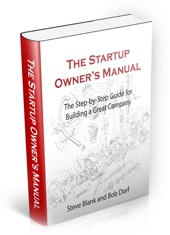
There is a simpler way, Steve Blank, has written books, taught classesand has done many things to showcase the Customer Development Methodology, which is nothing but a Business Model. If you approach problems with the Customer Development method, you can build a pretty good hypothesis and once you have an hypothesis, it can be validated and based on the results you can build a business. The trick is to get through that cycle as fast as you can and then execute based on the learning. It is never simple and straight forward you have change your hypothesis several times and build and re-build your business model that is why it is a startup.
The above video is from the Stanford University'sEntrepreneurship Corner. Alexander Osterwalder explaining his Business Model Canvas, with examples and Steve Blank joining him to discuss about Customer Development and how it all fits together. It is 53 minutes long but well worth it. There is an iPad App called Business Model Toolbox ($29) which you can buy, I think it is pretty neat because it has the Cost estimation embedded in it. The entire tool set could allow us to define our hypothesis and then we can use the canvas to define our value proposition and the customer pain vs gain map. This whole approach allows for understanding what needs to be validated. We talked a lot about Validated Learning in our meetup last week and I am still thinking about how do we know we are validating the right thing. Alexander and Steve explain this in the video. Check it out.
The meetup yesterday on the Lean Startup was very inspiring, so I am following up the post with some more thoughts on how can we implement the validated learning concept on various businesses and scenarios. I strongly believe that the Internet and all the applications that have been built on this global network provide us with valuable sensors to touch, feel and understand the dynamics of human behavior. We can conduct experiments, collect data and learn from them. This is precisely what Validated Learning is from my perspective. The classic example is the concept of selling a car through the internet, when someone floated this idea 13 years back, the conventional wisdom was it will never work but I know various examples from Steve Blank's book as well as Bill Gross'sinterview on This Week in Venture Capital with Mark Suster show how they experimented and did validated learning. Bill Gross is a fantastic ideas guy, check out the full video but if you want to skip to the part about the Car Selling example it is at 0:31:41 in the video. The summary of it is they had just put a landing page with some images of Car with a price tag on it, they had no inventory or distribution or management team or any infrastructure to support selling cars but they did it anyway to learn if anyone would click on the "Buy" button and their idea was if anyone click on it they will have validated the idea a car can be sold on through the Internet, they followed that link to test further hypothesis will a user actually give their credit card information and personal details like address, phone number etc sure enough they put up a form that takes in the information of the buyer and the credit card information. They were surprised to see the orders start to come in, and when it did they physically drove to a Car seller bought the car and deliver it to the buyers. When you think about this, the buyer really does not care whether you are buying it from another seller or not, all he cares about is the convenience of being able to buy a car from his office. They found out that there were many buyers and once they had validated that hypothesis, they built the infrastructure to support growing sales. Actually, I think they took down the site in a day because they could not fulfill the orders that poured in, thats what I can a luxury problem.
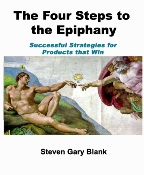
We had a fantastic turnout today with over 40 people participating in Hotel Kex lobby in our 4th event related to the Lean Startup book discussion. Ari led the discussion about Validated Learning, once again the whole meeting was in Icelandic until I interrupted the flow with my 2 cents in English :) what can I say I am like that. Anyways, it was very exciting to see the level of participation and interest in this material. I think the most important element of the discussion was when Gunni gave examples of how traditional businesses can apply the Validated Learning concepts to established and functioning business models, and how one can improve on them. The whole premise of the Validated Learning concept is to treat every assumption we have about our business like a scientific hypothesis and build tests to validate those hypothesis. There were a bunch of references during the examples and talk to Steve Blank's book the four steps to Epiphany. I thought this video was very apt as it talks about the lost lessons of validated learning, I like the conclusion- "Lean Startup does not teach you to create value, that comes from within and from your value system. Use Lean Startup methodology to refine that."
Building a business is hard, running one while you are building it is harder. No wonder there are all these metrics on the failure rate of startups. Try juggling 5 balls while you are on a mono-cycle on the freeway, that is what it feels like when you are in the early stage of a startup. So, how does one navigate this mine field? Well, if we go back to basics, we absolutely need to have defined metrics that matter to building the business. Eric Ries in his book Lean Startup talks a lot about this but none of the stuff that he his talking about is new, just like what Warren Buffet says he does in the investment process is simple, but doing what he does is very hard. I want to make one small change to Eric's method of Build-Measure-Learn, I want to change the order a bit Measure-Build-Learn. This idea goes back to the times when I was in software development, I actually got pretty good at it when I started writing Test Code before I actually wrote the Code for the Use Case, I saw that I was making rapid progress in how well I could write the actual functionality in the system. For all those people writing software, read the Refactoring, Test Driven Development method and Continuous Integration by Martin Fowler, Kent Beck and others. The Lean Startup book refers to this as well.
Lets define some metrics that matter, this also depends on which stage of the development the startup is:
Idea: You have a brilliant idea that you have shared with your friends and family and they think that this could be the next best thing to sliced bread. The things that you absolutely need to instrument at this stage are:
Is your potential customer really hurting so bad that they are willing to pay you to solve it? how do you know?
How will you find your customer? or more importantly how will they find your solution?
What is the size of the market? how do you know?
Is the market growing? how do you know?
Will the customer continue to buy from you? how do you know?
The important thing in instrumenting your idea is to automate it, i.e just like a dashboard in your car build some gauges. The age of the Internet has bought all this to your doorsteps. There are many resources that are available that provide you with a wealth of data that you can read and make an instrument out of.
Startup: You have validated the above 4 things and you have also build a Minimum Viable Product (MVP), you have your first customer and you are excited that this thing is actually going to make you afford a cafe latte. Great! so what are the metrics that you absolutely need to have here?
All of the above +
What feature of the solution that you have sold to the customer that the customer absolutely cannot do without? how do you know?
How do you plan to scale your business? i.e. how are you going to sell more stuff? how are you going to support the customers?
How do you collect your payment? have you automated it?
What is your turn around time for customer issues?
How many "features" read "bugs" that need to be addressed right away?
How many people visit your website? (although the above ideas can be for any type of business, this metric is critical, if you are not being found you are not going to scale the business... Period)
What is your conversion rate? i.e % of those visiting your site want to try your product/service
What in your website attracts the visitors? this is nothing but which links they click on.
How is your bookkeeping? are you accounts in order? have you automated it? again no excuse for not using tools that are available today to automate this important metric.
Once again measuring all of this is trivial in the age of internet. There are many tools available to do that Google Analytics, KISSmetrics, etc so no excuses for not having built instruments into your solution.
I saw this post on Business Insider with the title "Don't do a startup, You WILL fail!" based on a presentation by Dave McClure. Dave is a colorful Super Angel and invests with an interesting investment thesis. But what Dave says is spot on and he is one of those who don't Bull S#$%. Of course Dave goes on rant about all the wrong reasons that entrepreneurs start companies and then they complain that they were not successful. Go an flip through his presentation and ask yourself if you are doing your startup for any of those reasons. I like some of the tips that he has on the presentation, I like this one:
Doing a startup is a lesson in Pain & Sacrifice. If you are not ready to sacrifice and don't like pain, just don't bother because there will be times when you feel like you are scratching your fingernails against a rough sand paper. You need to have the persistence to ride those phases with optimism and positive energy.
You have not instrumented your market or your product, i.e you don't know or have any metrics about how your solutions is changing market behavior. You don't know what is a Lean Startup or Steve Blank's work on Customer Development. Dave has what he calls the AARRR Metrics. Which stands for:
Acquisition: How are users coming to your site from various channels? Do you know the channels?
Activation: Are users happy with their first experience?
Retention: Are users coming back?
Referral: Are users telling others?
Revenue: Are users spending money or allowing you to monetize in some way? The most important of all is whether you are measuring all of the above and what do they tell you.
You focus too much on the solution and not on the problem, better still you are really not solving a problem at all. It is not about the idea, it is always about the problem, the bigger, the bolder, the world changing the problem the better are you chances of building a business around that problem. I have written about it.
Your team sucks. There is no way out of that problem! You just need A players to go win the world. As I always say you cannot make a Donkey run the Kentucky Derby... it would get the sympathy but it will never win! The under dog stories are great but they rarely come true in real life. You better have a strong team that knows what it is doing otherwise you are lost period.
You have no knowledge of how to market or sell your product. You have this view that if you build it they will come. It is just not going to happen.
You have no idea of how to address any of the above topics but you have a fantastic idea! I say good luck, but I am sure Dave would say something much less nicer.

 There is a fundamental difference between a business model and business plan. A Business Model defines how you will make your product or service economically viable. A business plan describe how you are going to make your business model work. One does not always know how the plan is going to evolve, so building detailed plans although a great thought or intellectual exercise adds no real value because you are wasting time making assumption about the world out there and hope that your strategies or "plans" will address those assumptions and hypothesis. The truth could not be far from it. Most people confuse this with the product development road map and the classic example I get is people saying "hey, Steve Jobs did not go and interview his customers before he created the iPod, iPad, the Mac Air or any of the products that has come out of Apple..." to that I have only one answer, unfortunately there was only one Steve Jobs and how do we know that Steve did not do that? he had a keen eye for design and detail, he spend considerable amount of time in Silicon Valley being part of the information revolution and he had many fails to learn from. I try to remind those I am talking to that they need to spend 30 years in Silicon Valley, formed 2 or 3 multi-billion dollar companies, have the same network and experience of Steve Jobs before being able to compare themselves to what Steve Jobs did.
There is a simpler way, Steve Blank, has written books, taught classesand has done many things to showcase the Customer Development Methodology, which is nothing but a Business Model. If you approach problems with the Customer Development method, you can build a pretty good hypothesis and once you have an hypothesis, it can be validated and based on the results you can build a business. The trick is to get through that cycle as fast as you can and then execute based on the learning. It is never simple and straight forward you have change your hypothesis several times and build and re-build your business model that is why it is a startup.


